Roads and pavements
Roads that stay open in every season
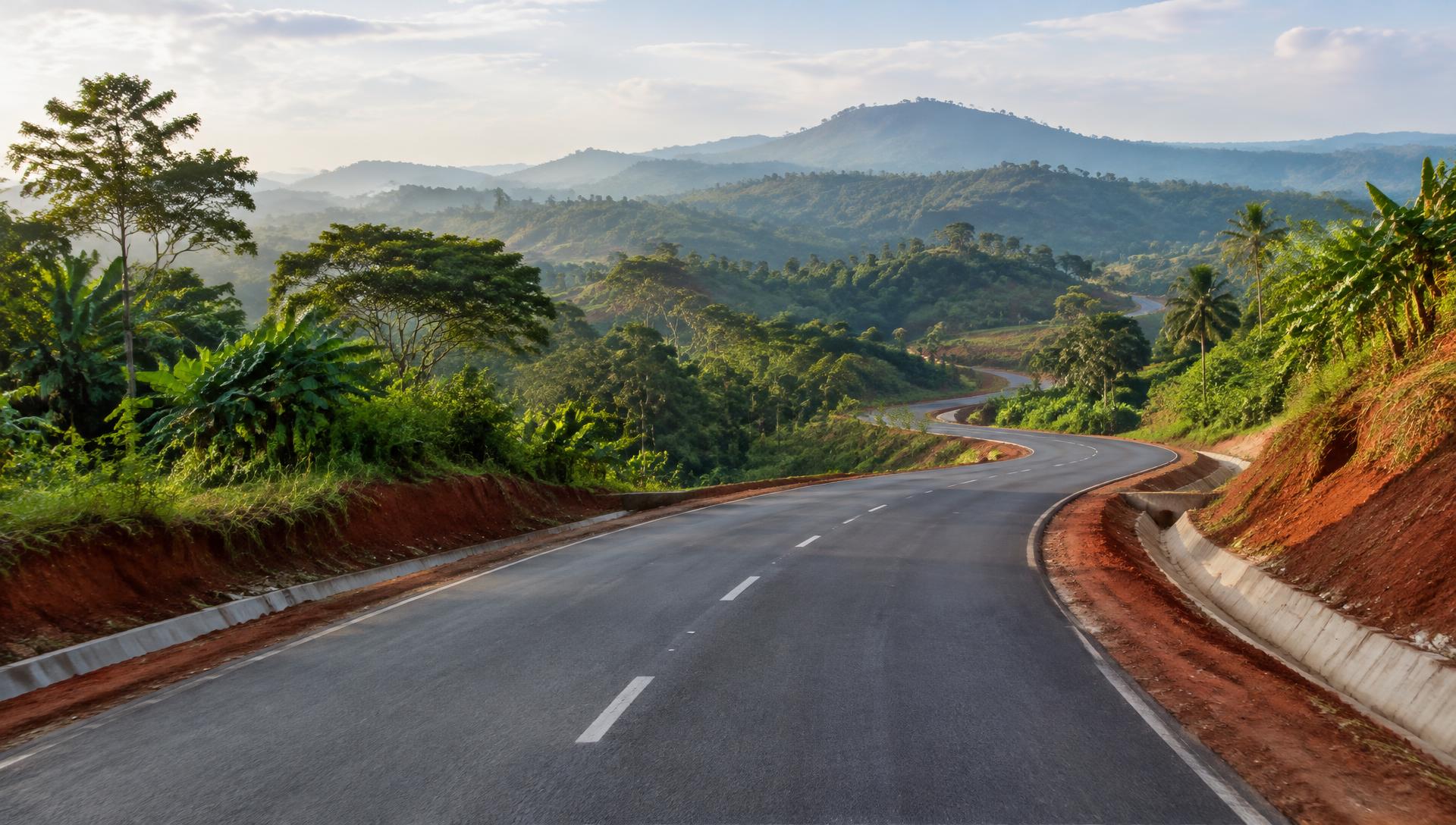
A well-built rural road brings a village closer to its market, its health centre and its school. KHAYROUAL GROUP builds improved earth roads, double and triple surface-dressed roads and asphalt-concrete roads, together with the drainage and crossing structures that make them last.
01The needs we address
A road is judged in the rainy season. A contracting authority's need often comes down to one question: will the community remain accessible all year, at a maintenance cost it can sustain?
- Open up a community with a road usable all year round.
- Surface an existing road to reduce dust, rutting and maintenance.
- Develop an urban street with drains, access slabs and footways.
- Rebuild a section damaged by water.
02What we study
- a.The alignment, gradients and low points where water concentrates.
- b.Watercourse crossings and existing structures to keep, strengthen or replace.
- c.Formation soils and the availability of selected materials nearby.
- d.Expected traffic, which guides the choice between gravelling, double or triple surface dressing and asphalt concrete.
- e.Residents' accesses, existing utilities and traffic constraints during works.
03Technical scope
Drainage first
Before any pavement layer, water needs a path: ditches, pipe culverts, box culverts and outfalls are set out and built first. A saturated formation cannot carry load.
Clearing and earthworks
Stripping, cut, fill, removal of poor ground and shaping of the formation to the approved profiles.
Pavement structure
Sub-base and base courses in selected materials, placed in layers and compacted under laboratory control.
Surfacing
Gravelling, double and triple surface dressing, asphalt concrete on urban streets, according to contract and traffic.
Crossings
Pipe culverts, box culverts and bridges integrated into the alignment, coordinated with our bridges team.
Maintenance access and signage
Shoulders, residents' access slabs, contractual signage and details that make routine maintenance easier.
04Execution sequence
- 01
File review and site visit
Alignment, low points, watercourse crossings, access constraints.
- 02
Survey and quantities
Setting out, profiles, setting-out report, agreement of quantities with the supervising engineer.
- 03
Studies
Laboratory investigations and tests, adaptation of crossing structures.
- 04
Quality and environmental plans
QAP and ESMP submitted to the supervising engineer.
- 05
Execution by sections
Drainage, earthworks, pavement, surfacing, inspections.
- 06
Acceptance
Pre-acceptance, clearance of reservations, provisional acceptance, then guarantee and final acceptance.
05Interfaces
- Supervising and contract engineers: approval of profiles, materials and structures.
- Accredited laboratory: soil, material and compaction testing.
- Utility operators: relocation or protection of lines and pipes.
- Local authorities and residents: access, right-of-way and traffic during works.
06What we hand over
- Setting-out and quantity reports
- Measurement sheets and statements
- Progress reports
- Test results
- Pre-acceptance, clearance and acceptance reports
- Documents required by the contract
07Preparing your project
The information that makes a first conversation genuinely useful:
- Precise location: start point, end point, estimated length
- Intended surfacing or expected level of service
- Existing studies: survey, geotechnical, preliminary design
- Known crossing structures along the alignment
- File stage: idea, studies, tender, awarded contract
- Desired schedule and seasonal constraints
08References
KHAYROUAL GROUP is classified in category B, Roads sub-sector (MINMAP, notice no. 00018 of 24/09/2025).
Endama – Elig Bitstetsa road and crossings of the Medjoa and the Lékié
Double surface-dressed road and crossings of the Medjoa and the Lékié, Elig-Mfomo (Lékié), delivered in consortium (2021 contract awarded to the KHAYROUAL GROUP SARL / ETS EBESCA consortium).
Location
Lékié · Centre
Song Mayo – Ngompem road, phase I, and 12 m bridge
Rural road with pipe culverts, concrete-lined ditches and strengthening of a 12 m bridge, Sanaga-Maritime.
Location
Sanaga-Maritime · Littoral
Assok – Essabah – Nkogoa road
Triple surface-dressed road with concrete-lined ditches and slabs between Assok and Nkogoa, Mfou (Méfou-et-Afamba).
Location
Méfou-et-Afamba · Centre
Works in progress
Santa Barbara – Tchad junction – Djaouro junction urban road
Urban road in asphalt concrete with drains and access slabs, Santa Barbara, Yaoundé I.
Location
Mfoundi · Centre
Essabah – Lada II road
Triple surface-dressed road and drainage between Essabah and Lada II, with a spur to the Grâce Divine health centre (Mfou).
Location
Méfou-et-Afamba · Centre
Maxwell district roads and service lanes
Triple surface-dressed roads and drainage in the Maxwell district (Méfou-et-Afamba).
Location
Méfou-et-Afamba · Centre
09Frequently asked questions
Which surfacings do you deliver?
Gravelling, double and triple surface dressing, and asphalt concrete on urban streets. The choice depends on traffic, maintenance budget and contract specifications.
Why start with drainage?
Because a pavement laid on a poorly drained formation deteriorates from the first rainy season. Ditches, culverts and outfalls are therefore set out and built before the pavement layers.
Do you work in towns as well as rural areas?
Yes. Our references range from double surface-dressed rural roads in the Lékié to an asphalt-concrete urban street in Yaoundé I, currently in progress.
What is your road categorisation?
KHAYROUAL GROUP is classified in category B, Roads sub-sector, by the committee attached to the Ministry of Public Contracts (notice no. 00018 of 24 September 2025).
Can you work in a consortium?
Yes. The Endama – Elig Bitstetsa road was delivered in consortium: the 2021 contract was awarded to the KHAYROUAL GROUP SARL / ETS EBESCA consortium.
Who carries out materials testing?
Accredited laboratories, under the supervising engineer's control. Results are recorded and handed over with the site documents.
How do you manage traffic during works?
Working by sections keeps a passage open. Diversions and temporary signage are set out in the environmental and social management plan.
Related expertise